Preparation · 18 June 2026 · 9 min read
Marrying on the water in Amsterdam: where do you begin?
A wedding day on the water has its own rhythm. The water sets the pace, the light sets the mood, and the route determines how the day unfolds. Couples who think this through early — cruising area, season and guest numbers — are left with very little still to decide.
by Elise Rijkes
Why more and more couples choose to marry on the water
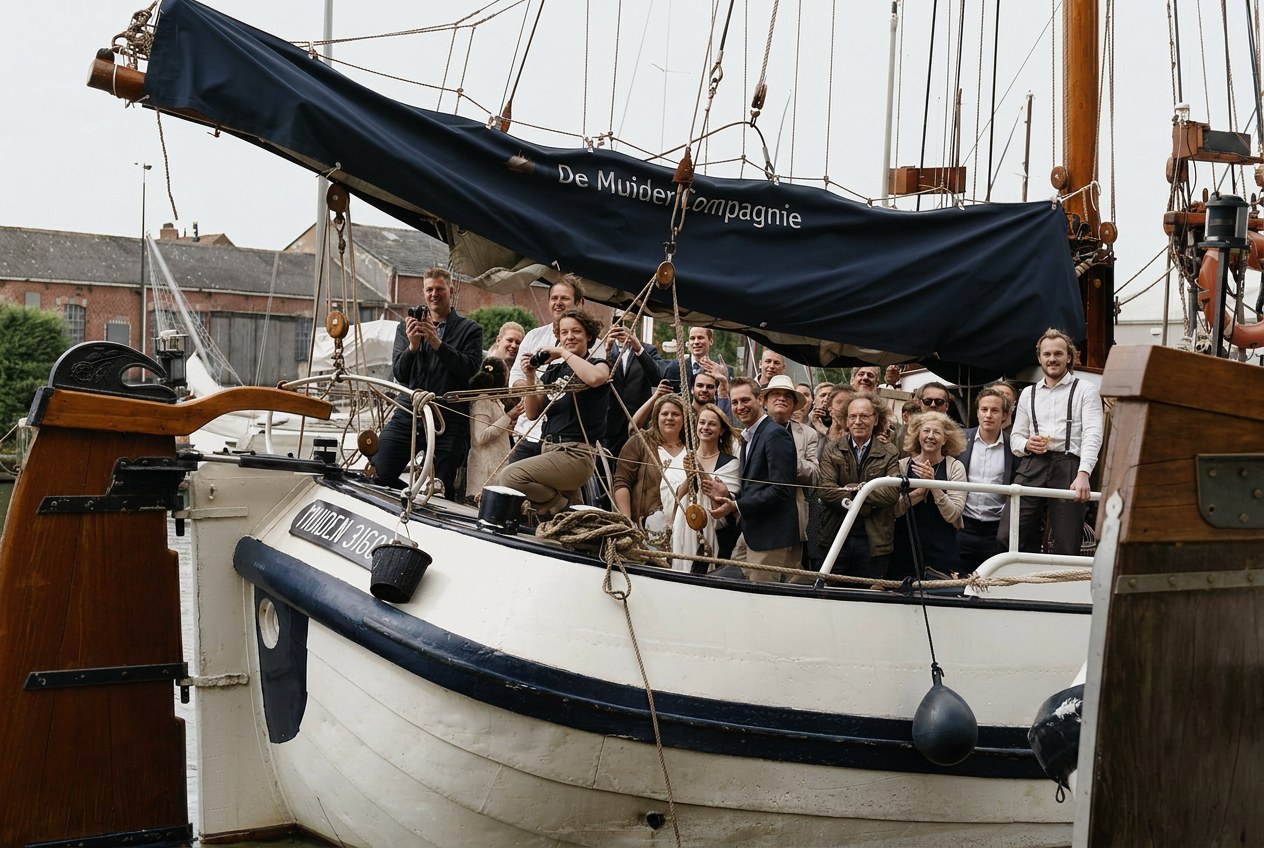
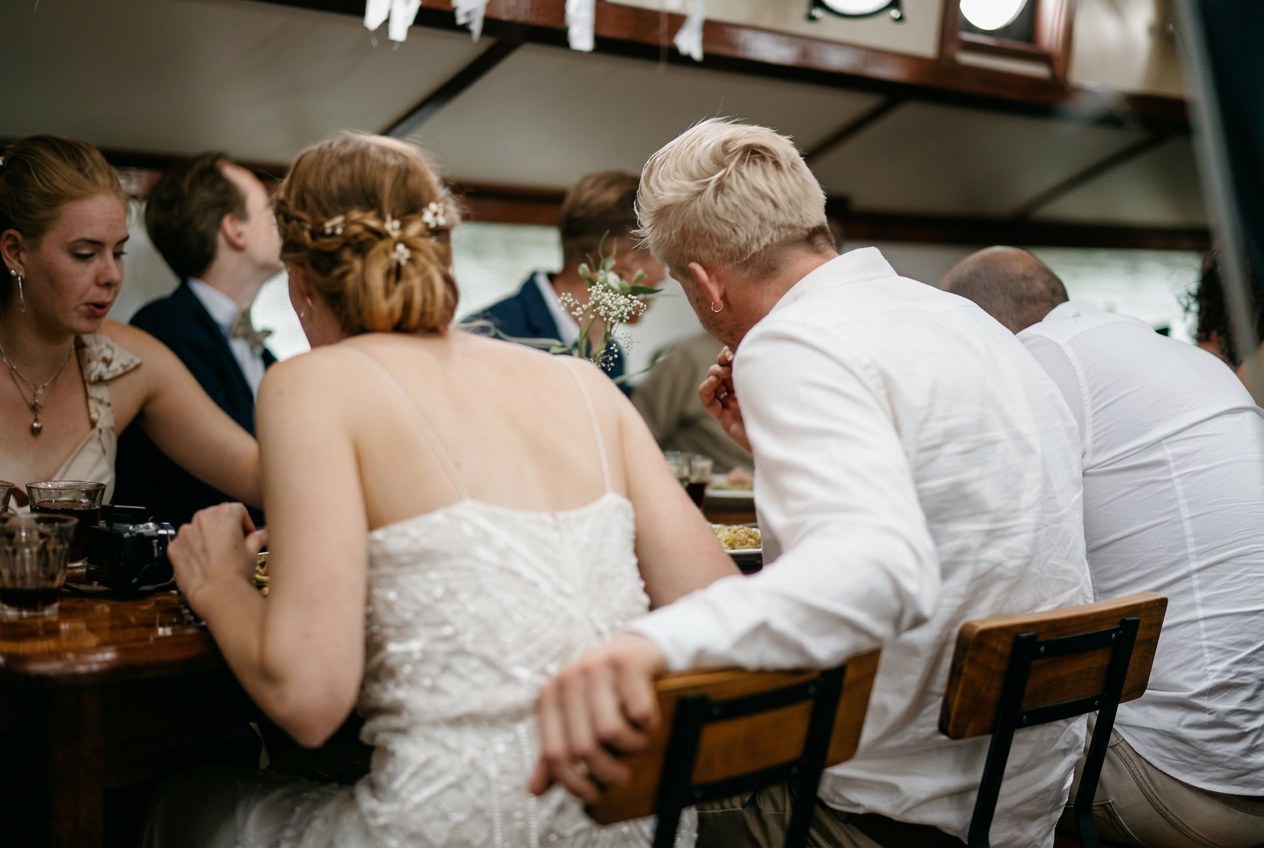
Amsterdam has a scarcity of remarkable wedding venues, but an abundance of water. The canals, the IJ, the Markermeer and the IJmeer together offer a range of atmospheres that no venue on land could ever match. A floating wedding venue adds something a fixed location never can: movement. The skyline glides past, the light changes every quarter of an hour, and guests experience the city from an unfamiliar vantage point.
A wedding venue on the water is also inherently exclusive. There is no second wedding taking place on the same vessel that afternoon, and the route you sail exists, for that moment, only for your party. For couples who want a personal, unusual day without compromising on comfort or care, that is often the deciding factor.
Begin with the feeling, not the vessel
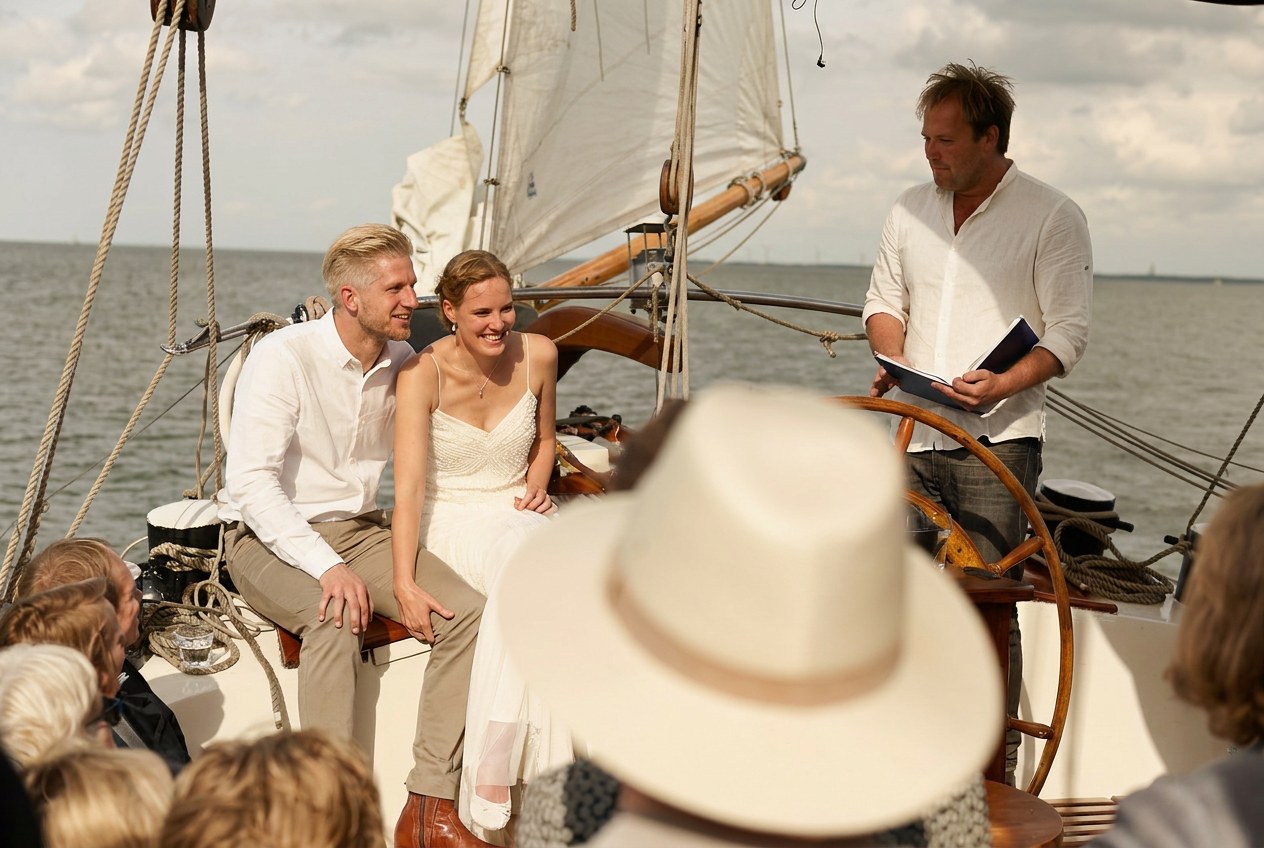
Before we talk about ships, we always ask couples the same question: which moment should still be vivid ten years from now? For some, it is the vows exchanged with only their closest circle on the deck of an intimate saloon boat. For others, it is the moment the city disappears below the horizon and the open water of the Markermeer begins, wind filling the sails of a classic tall ship.
That answer determines almost everything that follows: the cruising area, the vessel, the number of guests and the time you step aboard. Couples who skip this conversation and book a ship straight away often discover afterwards that the atmosphere does not match what they had actually envisioned.
It helps to have this conversation together, guided by three words that should define the day. Intimate, exuberant and calm call for a very different vessel and cruising area than large-scale, festive and urban.
Then choose the cruising area
Amsterdam's canals offer intimacy: close, sheltered, with the city as a backdrop that slowly slips by beneath historic bridges. This cruising area is ideal for smaller parties and for a ceremony framed by canal houses and chestnut trees.
The IJ, the Markermeer and the IJmeer offer space instead: wide skies, wind in the sails and a horizon that makes the day feel larger than the guest list. For a classic tall ship, this is the natural domain, since these vessels need draught and room to sail.
A combination of both cruising areas often works beautifully. A ceremony in the shelter of a canal, celebrations on the open water of the IJmeer, or the reverse, with a homecoming through the city at sunset to close the evening.
Only then match the vessel to the mood
A vessel is not a venue you tick off a list, but a character you choose. A classic tall ship calls for long tables, warm timber and sails creaking in the wind. A saloon boat calls for glass, light and a city pouring in from every side. A classic steamship adds a third register altogether, with art deco saloons and brasswork lending a timeless atmosphere.
Once the feeling and the cruising area are settled, the right vessel often becomes obvious. We always advise couples to view at least two vessels before deciding, precisely because photographs rarely do justice to the space, the acoustics and the light on board.
Guest numbers and how they shape the choice
The number of guests determines which vessels come into consideration, but it is not the first criterion. A party of 30 fits on almost any type of vessel, but feels very different on a saloon boat built for 40 than on a classic tall ship built for 120. Choose not on maximum capacity, but on the density you want to experience.
For parties above 80 guests, the available options narrow, and the choice often falls naturally on a larger classic tall ship or a combination of two vessels moored alongside one another.
Season and time of day as guiding factors
Marrying on the water in Amsterdam is possible year-round, but the season strongly colours the experience. From May to September there is the most daylight, allowing for a long afternoon on deck and an evening that only turns to candlelight late in the day. In spring and autumn, golden hour arrives earlier, producing a more intimate, warmer schedule.
Winter weddings on the water are entirely possible too, provided the vessel is heated and a sheltered route is chosen. Some couples deliberately choose a winter wedding on a saloon boat, with a closed circle of guests and an atmosphere that feels almost domestic, thanks to condensation on the windows and a low winter sun.
Bring budget into the conversation early
A realistic view of the budget belongs in the first conversation, not after a vessel has already been chosen. The costs of a wedding on the water broadly consist of vessel hire with crew, catering, drinks and styling. These elements relate to one another differently than at a wedding on land, because the vessel covers both the venue and part of the logistics.
Couples who discuss budget upfront with a wedding planner can steer towards the right balance of vessel, guest numbers and season, without compromising the atmosphere they originally envisioned.
The role of a dedicated wedding planner
At Waterbruiloft.com, the entire preparation runs through a single, dedicated point of contact. Elise Rijkes guides couples from the first exploratory conversation to the last dance on deck, and so knows every detail of the day without anything needing to be explained twice.
That continuity is precisely why the first question is never about a vessel, but about the feeling the day should carry. Everything after that, from cruising area to menu, is built around it.
"The day wasn't planned around a schedule, but around the light. That changes everything."
Frequently asked questions
- Can I marry on the water in Amsterdam all year round?
- Yes, provided the vessel is heated and a sheltered route is chosen in less favourable weather. In summer there is more daylight for a long afternoon on deck; in winter an even more intimate atmosphere emerges indoors.
- How many guests can join a floating wedding venue?
- This varies greatly by vessel. A saloon boat is generally suitable for 2 to 60 guests, while a classic tall ship can carry 20 to 200 guests, depending on the format of the day.
- Should I choose a vessel first or a date first?
- We advise determining the feeling and cruising area first, then the vessel, and only then fixing the date. Popular Saturdays between May and September fill up fastest.
- Can the official ceremony also take place on board?
- A legally binding ceremony requires a designated wedding venue and a municipal registrar. Many couples therefore combine a brief official ceremony on land with a full, personal ceremony on board.
- Do you work with a dedicated wedding planner?
- Yes, Elise Rijkes guides couples from the first conversation through to the wedding day itself, so there is always a single point of contact for every choice around vessel, styling and catering.
In the mood to talk it through?
One dedicated point of contact, from first idea to the final mooring line.
Plan a conversation