Our fleet · 16 July 2026 · 9 min read
Hiring a saloon boat for your wedding: eight practical considerations
A saloon boat is the most versatile floating wedding venue: weatherproof, warm, bright and usable all year round. The differences between vessels lie in details you only notice once you're aboard, and those details ultimately determine whether your day runs smoothly.
by Elise Rijkes

Why hiring a saloon boat for your wedding is so popular
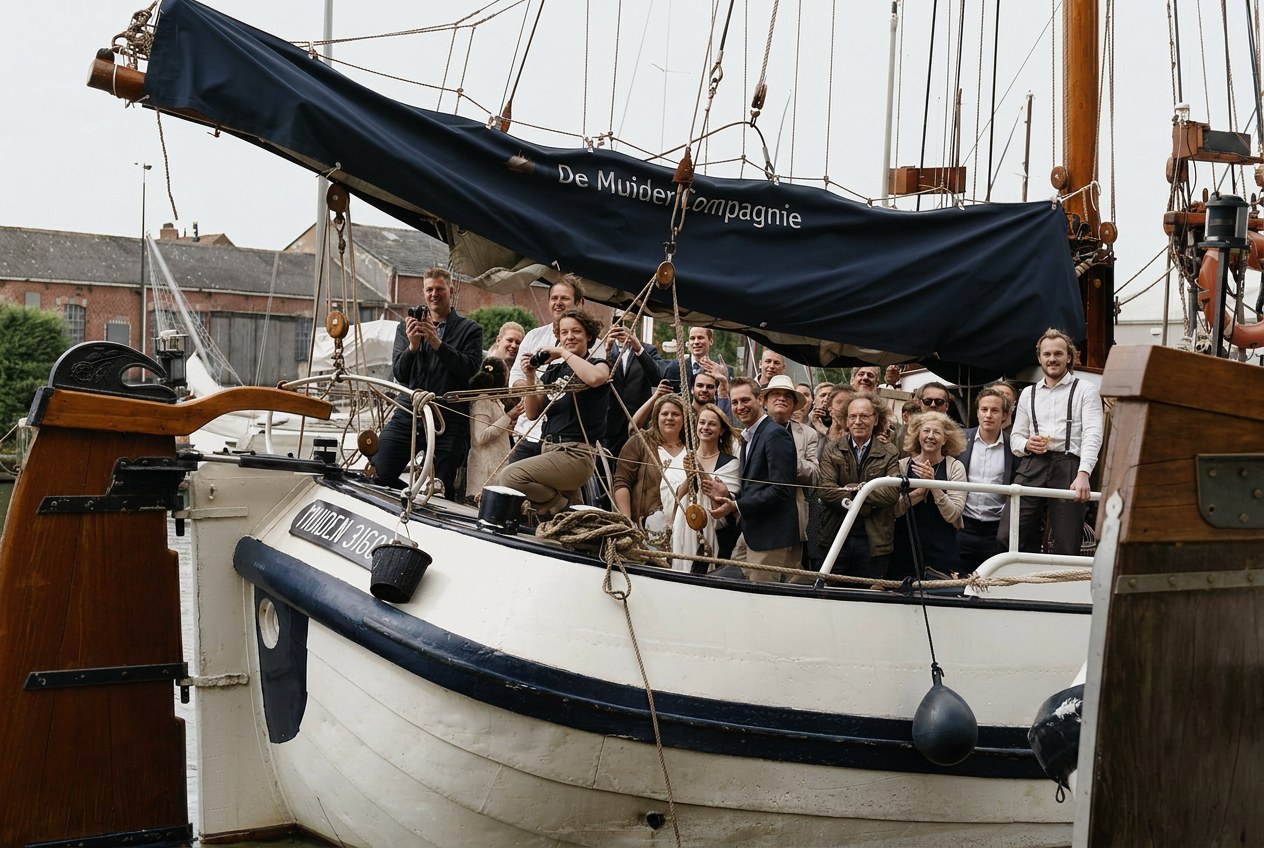
A saloon boat combines the flexibility of a hall with the atmosphere of sailing. The vessel can be used year-round, regardless of rain or bright sunshine, because the saloon is covered and often heated or air-conditioned. For couples who won't compromise on comfort but do want to marry on the water, a saloon boat is often the first choice.
A saloon boat also offers room for a wide range of programmes: from an intimate ceremony for twenty guests to an exuberant party for a hundred, with the same floating venue as backdrop.
Indoors and outdoors in balance
Check whether the vessel has a usable outer deck alongside the saloon. A ceremony in the open air followed by dinner indoors is the most requested format, and that calls for both spaces to be of roughly similar size, so guests are never crowded.
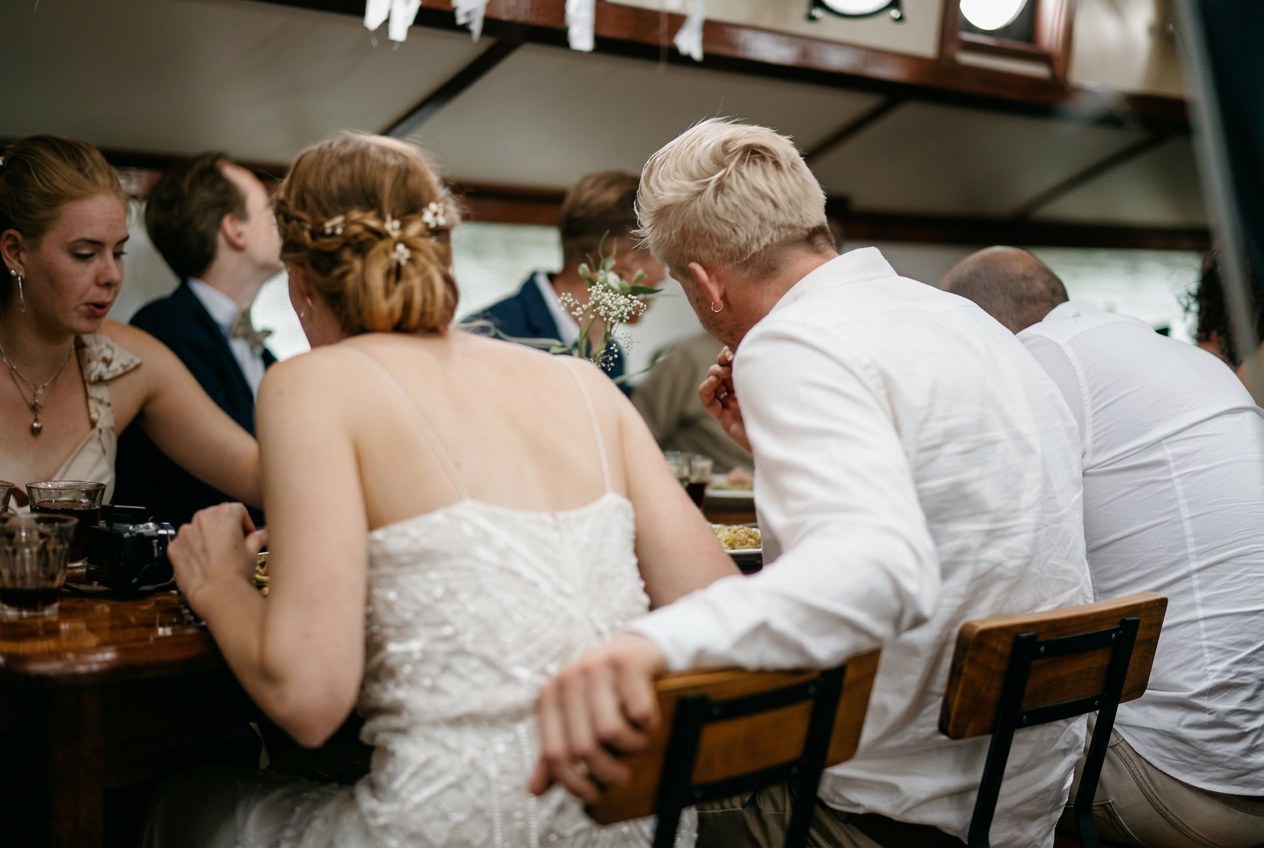
Also pay attention to the window lines: the lower the edge, the more water you see from the table. Some saloon boats have panoramic windows that reach almost to the tabletop, greatly heightening the feeling of sailing during dinner.
Ask, too, about the deck layout: is there room for a dance floor, a DJ corner or a bar, or must all of that be arranged indoors? That strongly determines how the evening unfolds.
The technology that carries the evening
Heating and air conditioning determine comfort just as much in April as in August. An onboard kitchen makes a warm, multi-course dinner possible instead of only cold, pre-prepared dishes, immediately raising the standard of the catering.
A sound system with its own mixing desk prevents improvised solutions during speeches and the first dance. Always ask whether the vessel has a fixed installation or whether extra equipment needs to be brought aboard, as that affects set-up time.
Ask also about the number of lavatories on board. For parties above 60 guests, two lavatories is the minimum for a relaxed evening, especially once alcohol is being served and queues can build.
Assessing capacity and layout realistically
The maximum licensed capacity of a saloon boat is rarely the number at which a dinner still feels comfortable. For a seated dinner, allow around 1.2 square metres per guest, including room for service and a gangway between tables.
A vessel licensed for 120 people feels comfortable at a seated dinner with 70 to 80 guests. Choose not on maximum capacity, but on the format of your day: ceremony on deck, dinner indoors, celebrations on both decks at once.
Atmosphere and styling matched to the vessel
Warm timber, brass and linen call for restrained styling: low flower arrangements, candlelight in sturdy glass hurricanes and a single colour accent per table. Tall arrangements block the view, and that view is precisely why you're aboard.
Choose flowers and materials that withstand a slight swell: compact compositions with sturdy stems hold their form longer than tall, loose bouquets that shift easily while sailing.
Catering and the onboard kitchen
Not every saloon boat has a full kitchen. Some vessels work with a caterer who reheats and plates on location, others have their own kitchen where everything is cooked fresh. Ask about this early in the process, as it strongly determines which menus are possible.
For a multi-course dinner with warm dishes, an onboard kitchen with sufficient capacity is essential. If in doubt, we always taste ahead of time with the chef, so there are no surprises on the evening itself.
Accessibility and ease of boarding
Some saloon boats have a low, flat entry, others require a short set of steps from the quay to the deck. For guests with limited mobility, or a bridal gown with a long train, this is a detail worth checking in advance.
We visit every vessel beforehand together with couples for whom accessibility is a concern, so there are no surprises on the day itself when boarding and disembarking.
Making the right choice with guidance
With dozens of saloon boats available in Amsterdam, the choice can feel overwhelming. Elise Rijkes knows the fleet in detail, from window height to kitchen capacity, and matches the vessel to the atmosphere, the party and the season of your wedding.
That guidance prevents you from discovering, only on the day itself, that a detail didn't suit your wishes, and ensures the vessel you've hired feels right from the very first minute.
"Tall arrangements block the view, and that view is precisely why you're aboard."
Frequently asked questions
- Is a saloon boat suitable for a winter wedding?
- Yes, provided the vessel has good heating. A saloon boat offers a warm, intimate venue with an entirely distinct atmosphere on the water, especially in winter.
- How many guests fit comfortably on a saloon boat?
- That depends on the vessel and the format, but for a seated dinner allow around 1.2 square metres per guest. A vessel licensed for 120 people feels comfortable at a dinner with 70 to 80 guests.
- Can fresh food be cooked on a saloon boat?
- On vessels with their own kitchen, yes; other vessels work with a caterer who plates on location. Always ask about this early in the selection process.
- How many lavatories does a saloon boat need for a wedding?
- For parties above 60 guests, two lavatories is the minimum for a relaxed evening, especially once alcohol is being served.
- Is a saloon boat wheelchair accessible?
- This varies by vessel. Some saloon boats have a low, flat entry, others a short set of steps from the quay. We check this in advance with couples for whom it's a concern.
- Can flowers and styling withstand wind and a slight swell?
- With the right choices, yes. Compact compositions with sturdy stems and weighted candle holders stay in place, while tall, loose arrangements shift more easily.
In the mood to talk it through?
One dedicated point of contact, from first idea to the final mooring line.
Plan a conversation