Our fleet · 2 July 2026 · 9 min read
A classic steamship as your wedding venue in Amsterdam: sailing with history
Some vessels are transport, others are heritage. A classic steamship belongs firmly in the second category: built in the nineteenth century, kept sailing with great care, and eminently suited as a floating wedding venue for weddings of up to 150 guests.
by Elise Rijkes

Why steam feels different
A steam engine runs without the vibration and thudding of a diesel motor. The vessel glides almost silently through the water, and at the table you mostly hear your guests' conversation rather than an engine humming in the background. That makes speeches, music and the clinking of glasses aboard remarkably pleasant.
Anyone who has ever been on a modern sightseeing boat notices the contrast immediately. On a classic steamship, the motion is softer, the atmosphere calmer and the pace of the voyage slower — precisely what you want on the day everything is allowed to slow down a little.
The engine room itself is also an attraction in its own right. During drinks, guests love to take a peek at the gleaming brasswork and the boiler, a talking point you won't find at any venue on land.
A vessel with a story
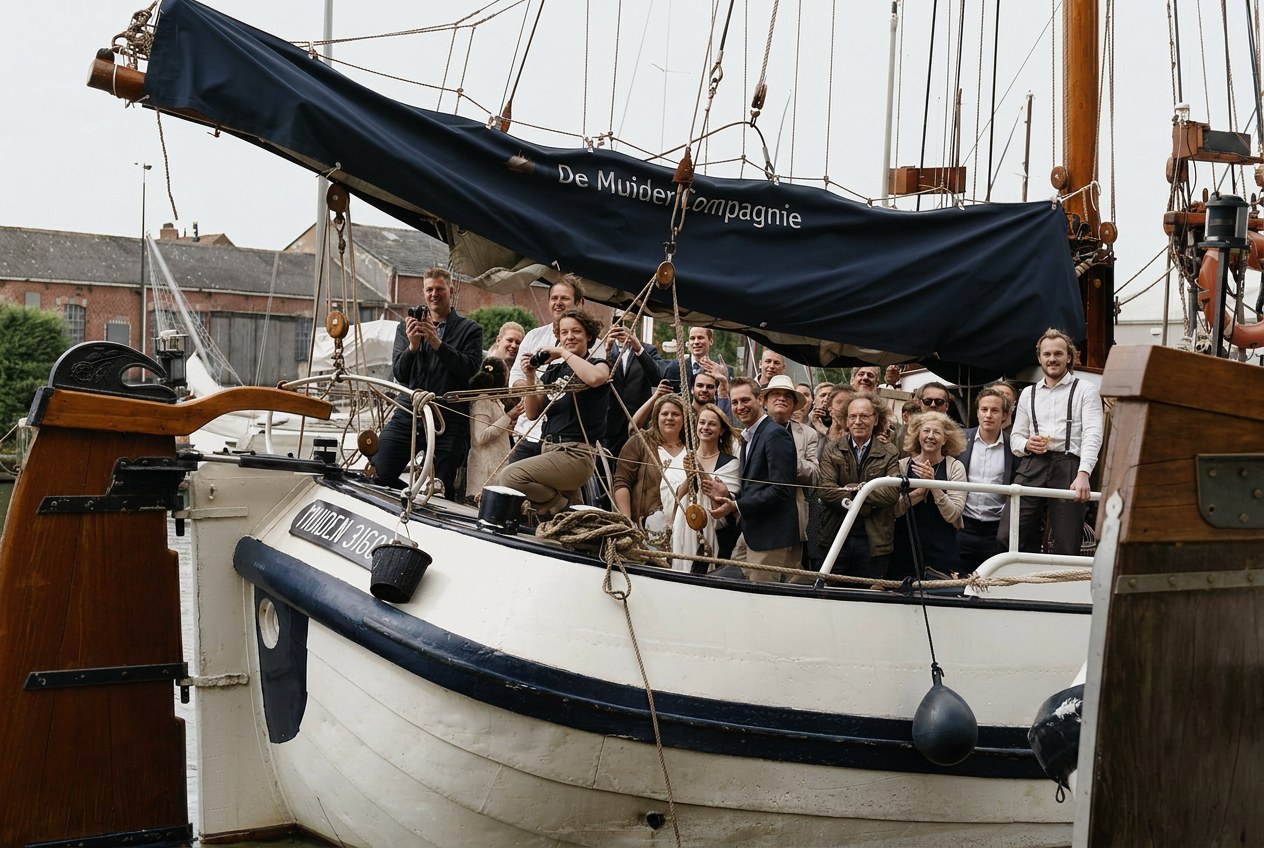
The steamships we deploy for weddings in Amsterdam date from the late nineteenth century. They have been restored down to the last detail, from the polished timber to the brass fittings, and still run on steam power. Marrying aboard such a vessel means marrying within a floating piece of heritage.
For couples who love history, this adds an extra layer of meaning to the day. Your wedding becomes part of a story that has been written on the IJ and the canals of Amsterdam for more than a century.
Two saloons, two moods
A large steamship typically has two saloons: one for the seated dinner and one perfectly suited to the bar and the dance floor. This lets you shift the mood within a single vessel without needing to rearrange anything during the evening.
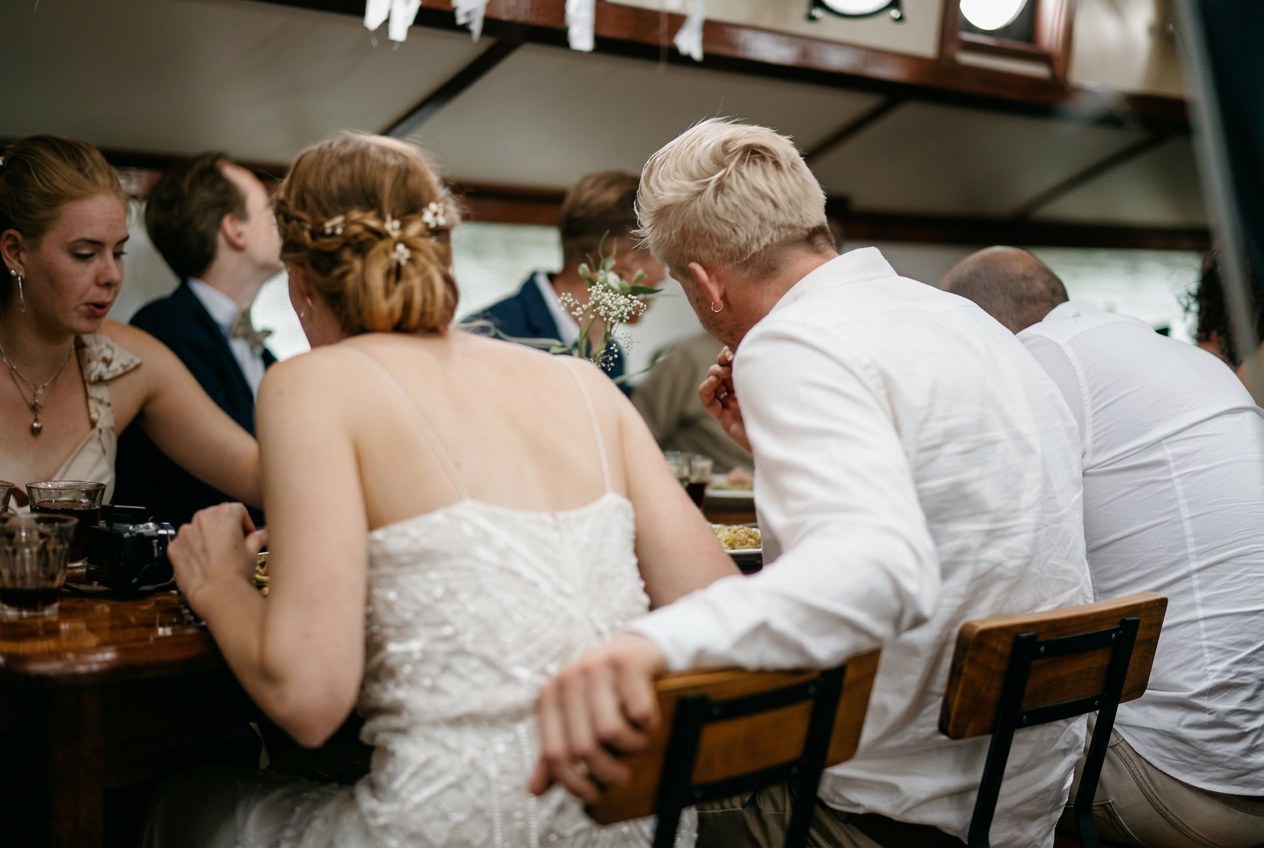
One saloon feels formal and intimate with laid tables and candlelight, the other transforms effortlessly after dinner into a dance floor with a DJ or band. Guests move quite literally from one chapter of the evening to the next.
The outer deck offers space for the ceremony itself and for the first drinks as the vessel sets sail, with a view of the Amsterdam skyline as it slowly gets under way.
Room for ceremony and reception
A classic steamship offers ample deck space to hold the wedding ceremony in the open air, with the city as its backdrop. After the ceremony, the party moves indoors for the reception, while the vessel sails calmly on.
That interplay of indoors and outdoors, of sailing and mooring, gives the day a natural structure in which every part finds its own place and mood.
Catering and service on board
The crew and caterers who work with these vessels know the layout and possibilities of the galley in detail. A multi-course dinner, an elaborate walking dinner or drinks with small dishes — all are possible within the constraints and charm of a historic vessel.
Because the kitchen is more compact than on land, the best results come from a menu tailored to what can genuinely be prepared aboard. Our dedicated wedding planner, Elise Rijkes, thinks this through with you from the very first meeting.
Music and acoustics in a historic saloon
Timber and brass sound warmer than glass and steel. In the saloons of a classic steamship, music carries differently — fuller, with less echo than in a modern hall. A small acoustic ensemble during dinner and a DJ later in the evening both come into their own here.
Do watch the power of the sound system: a historic saloon calls for subtlety, not a festival rig. We advise on this in advance, together with the crew.
Practical matters: permits and route
Marrying on the water in Amsterdam requires a number of practical arrangements: a suitable boarding point, a sailing permit for the chosen route and time, and consultation with the skipper about tide and bridges. We arrange all of this for you in full.
Most weddings sail a loop over the IJ and through the canals, with a stop at a quiet mooring for the ceremony or dinner.
Who it suits
Parties of 40 to 150 guests, couples with a love of history, and days in which a seated dinner and a standing party both deserve a full place, find their ideal floating wedding venue aboard a classic steamship.
A steamship also works well for weddings with an international party: it's a distinctly Dutch experience that overseas guests will remember for years.
How to start planning
Book a historic steamship well in advance, especially for a date in the high season between May and September. Availability is more limited than for modern saloon boats, simply because fewer of these vessels exist.
An initial meeting on board, including a short trial sail, gives the best impression of atmosphere, sound and space before you make your final decision.
"On a steamship, you don't hear an engine, you hear your own wedding."
Frequently asked questions
- How many guests fit on a classic steamship?
- Most historic steamships we deploy offer room for 40 to 150 guests, depending on the layout for ceremony, dinner and celebration. We advise on this individually during the first meeting.
- Is a classic steamship suitable for a seated dinner?
- Yes, the larger steamships have a separate saloon perfectly furnished for a multi-course dinner with service. After dinner, the party can move on to the second saloon for the celebration.
- Can the ceremony itself also take place on board?
- Certainly, the outer deck of a classic steamship is excellently suited to a ceremony while sailing, with the Amsterdam skyline as backdrop.
- How far in advance should we book?
- Because relatively few historic steamships are available, we advise booking at least nine to twelve months ahead, especially for dates in the high season.
- Is music and dancing possible on a historic vessel?
- Yes, the second saloon is generally suited to a dance party with DJ or band. The acoustics of a wooden saloon sound warm, but call for a volume level matched to the space.
In the mood to talk it through?
One dedicated point of contact, from first idea to the final mooring line.
Plan a conversation