Mood & styling · 27 May 2026 · 8 min read
Which season and time of day make for the most beautiful water wedding?
On land, you can adjust the light with candles and lamps. On the water it works the other way round: the light dictates the day. We set the schedule of a wedding on the water around it, not alongside it, so every moment falls in the best possible light.
by Elise Rijkes
Why light behaves differently on the water
On open water, light reflects in a way that simply doesn't exist on land. Every hour of the day changes the colour of the water, the façades along the canal and the complexion of your guests. Photographers who often work on the water know that a vessel in the wrong light produces an entirely different photograph from the same vessel an hour later.
That means a wedding day on the water doesn't begin with a timetable, but with a light plan. We therefore always plan the moment of sunset for the chosen date first, and build the rest of the day around it.
Golden hour: a window you cannot move
The last hour before sunset bathes water, skin and linen alike in a warm, soft glow. Photographers wait for it all day. We deliberately schedule the vows, or the first glass of champagne, within that window, so the most beautiful images arise without anyone needing to pose.
Golden hour shifts with the season: in June it falls around 9pm, by October already around 6.30pm. That difference of several hours has a significant impact on when the ceremony, dinner and celebrations are planned.
What comes before: a gentle build-up
In the hours before golden hour, we keep the pace unhurried: welcome drinks on the quay, canapés served on deck as the vessel casts off, music playing softly in the background. This is when guests settle into their new surroundings and find one another.
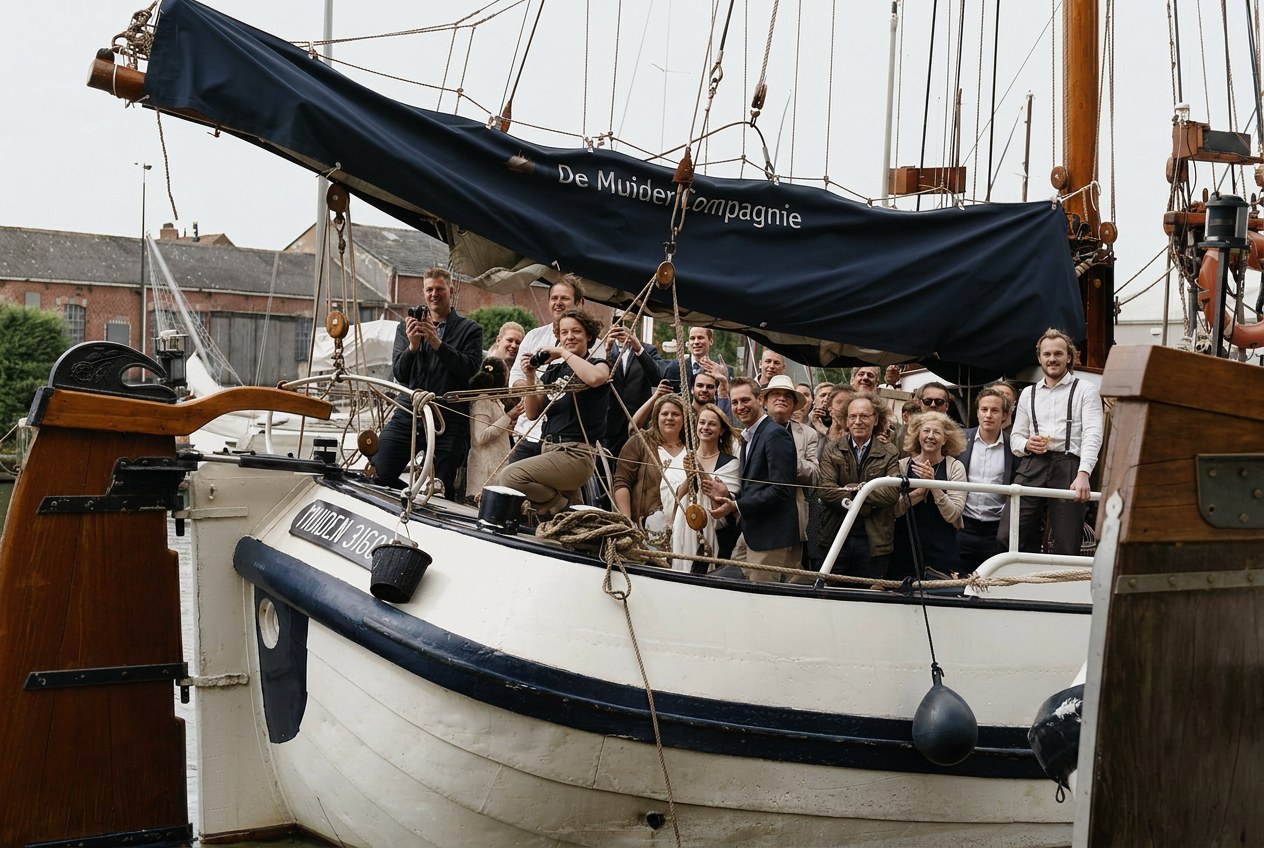
For couples choosing a classic tall ship, this is also the moment the sails are hoisted — itself a small ceremony that draws the attention of every guest.
What comes after: the evening's turning point
After sunset, the day visibly turns. Candlelight replaces daylight, the tables are set for longer, and the pace on deck shifts from easy conversation to dancing and toasting. The evening acquires its own dramaturgy without anyone needing to announce that the party has begun.
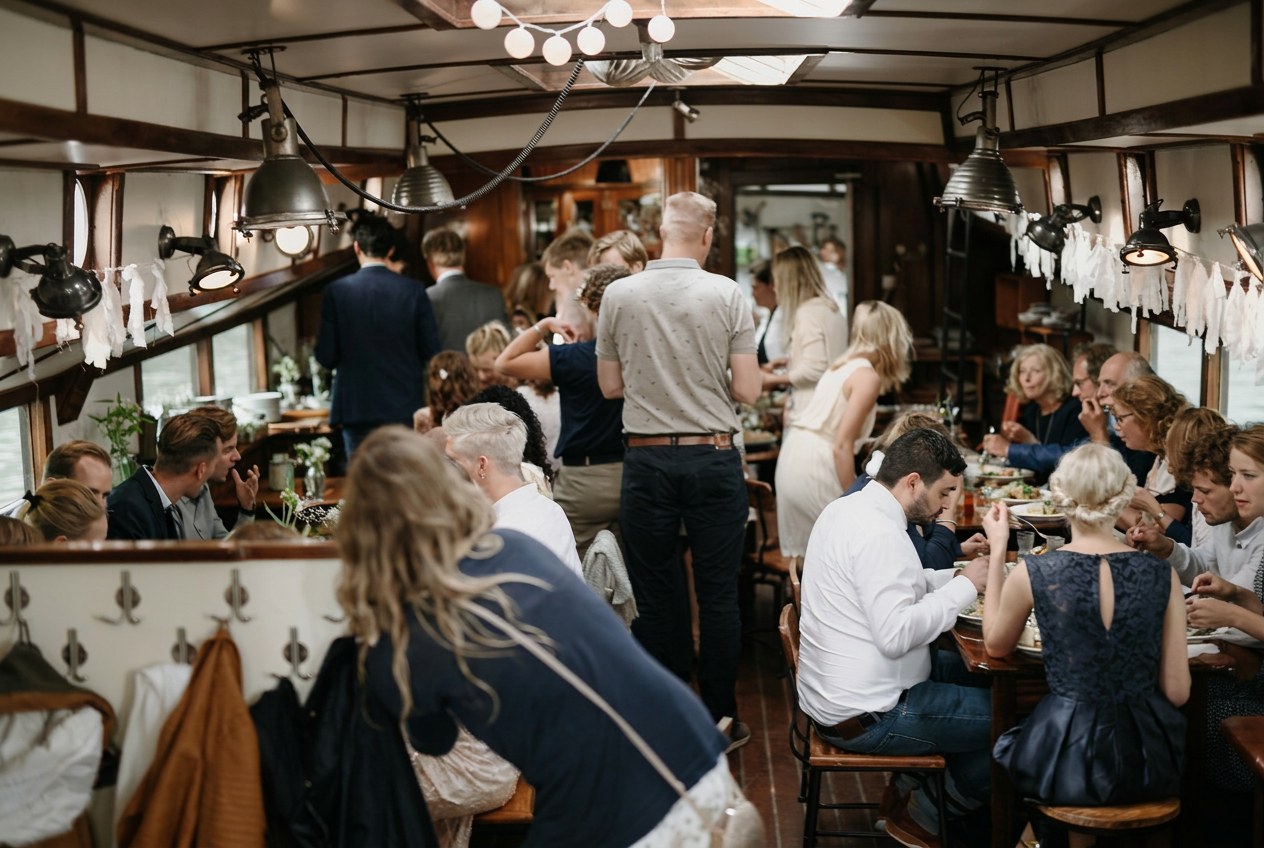
On a saloon boat, this transition works especially well, because the glass walls bring the city's lights in just as darkness falls outside.
Choosing a season based on atmosphere
Summer gives the longest days and the most room for an extended programme on deck, with perhaps a brief stop on the Markermeer for a swim or a quiet moment on the water. The trade-off is that popular Saturdays between June and August fill up fastest.
Spring and autumn give a more intimate light, with longer shadows and a golden hour that falls earlier in the day. This season is favoured by couples wanting a smaller party and a calmer schedule.
Winter offers a romance all its own: short days, early darkness and a saloon boat glowing warmly inside while the canals lie dark outside. For an intimate wedding by candlelight, this is often the most atmospheric choice.
The schedule in practice
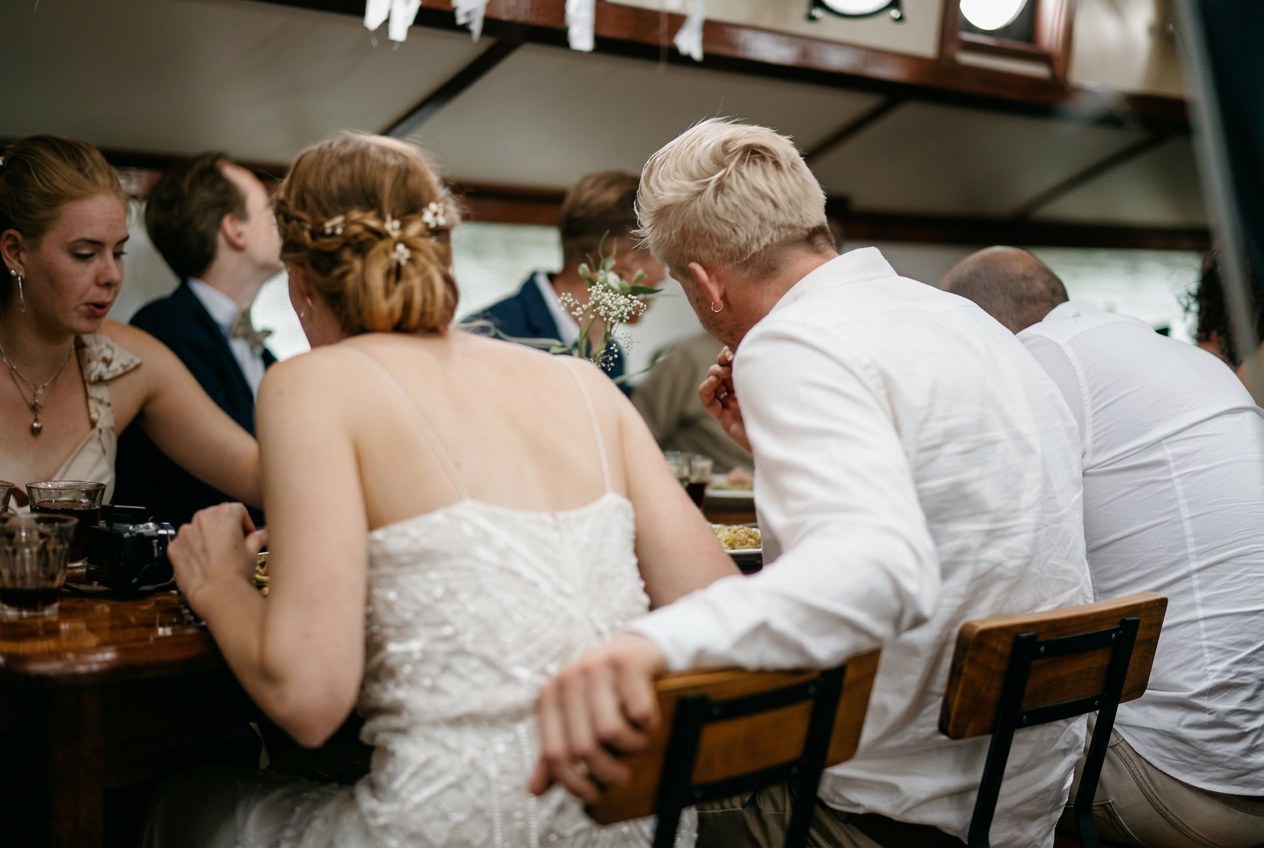
A proven schedule for a summer wedding day on the water is: boarding at 3pm, ceremony at 4pm on open water, drinks on deck until 6pm, dinner indoors from 7pm as the glow of golden hour fades, and dancing from 9.30pm.
In autumn, this entire schedule moves forward two to three hours, so the ceremony still falls within golden hour and dinner can begin by candlelight straight after.
Weather and a plan B
Wind and cloud cover can strongly influence the light, even within the same season. We therefore always keep an alternative route in reserve — a sheltered canal instead of open water in too much wind, for instance — without compromising the atmosphere.
In rain, a saloon boat remains fully usable, since the glass superstructure offers views without guests getting wet. A classic tall ship, in that case, calls for an adjusted programme under cover.
Frequently asked questions
- What exactly is golden hour?
- Golden hour is the last hour before sunset, when the light turns soft and warm in colour. On the water, this effect is intensified by reflection off the water itself.
- Which season is most beautiful for a wedding on the water?
- That depends on the atmosphere you want. Summer offers long, bright days; spring and autumn offer a more intimate golden hour earlier in the day; and winter offers a warm, intimate atmosphere with candlelight.
- What happens in bad weather?
- A saloon boat remains fully usable even in rain, thanks to its glass superstructure. On a classic tall ship, the programme is in that case moved under cover.
- What time should the ceremony take place for the best photographs?
- Ideally the ceremony or first glass of champagne falls within golden hour, which varies by season and is determined together with the wedding planner for the chosen date.
In the mood to talk it through?
One dedicated point of contact, from first idea to the final mooring line.
Plan a conversation