Behind the scenes · 28 February 2026 · 8 min read
What does a wedding planner do for a wedding on the water?
A wedding day on the water has far more moving parts than a wedding on land: skipper, chef, florist, music, timings, locks and tides all need to align. We bring that together in one dedicated wedding planner who knows the whole day, from the first conversation to the last moment on board.
by Elise Rijkes
Why a floating venue calls for something different
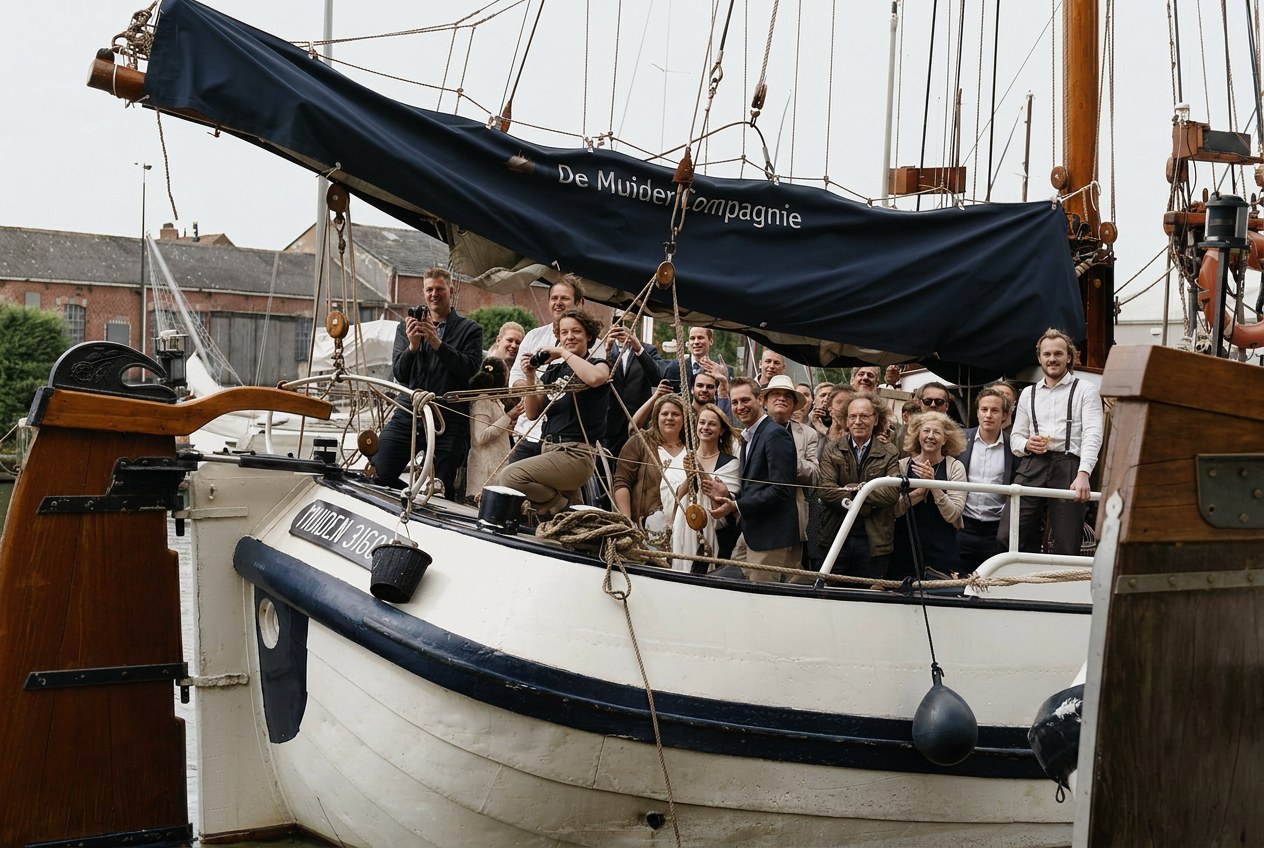
Marrying aboard a boat in Amsterdam presents challenges you won't encounter on land. Bridges need to open, locks have waiting times, the weather determines whether you sit on deck or indoors, and catering must be prepared from a compact galley. All these factors constantly affect one another.
Anyone who arranges this separately, with an independent caterer, an independent florist and a skipper who only manages the sailing, risks nobody keeping oversight of the whole. One wedding planner who knows every part prevents that.
One memory for the whole day
Everything said in the first conversation — about family, about sensitivities within the guest list, about the favourite song for the first dance — stays with the same person. Nothing needs to be explained twice to different suppliers.
That sounds like a small advantage, but on the day itself it makes a great difference. A wedding planner who knows the bride's mother would rather not be mentioned first during the speeches, or that the groom dislikes surprises on stage, can anticipate that without anyone needing to ask.
From first conversation to final planning
The process begins with an exploratory conversation in which we listen to the feeling the couple has in mind, apart from practical details. Only afterwards do we translate that into a vessel, a cruising area and a day's structure that fit logically together.
In the months that follow, the wedding planner coordinates every supplier: catering, florist, musicians, photographer and skipper. Each element is aligned with the sailing times and with one another, so no overlap or gap arises in the programme.
Shortly before the wedding day, a final run-through takes place in which the complete schedule, including margins for bridges and locks, is reviewed with everyone involved.
Calm on the day itself
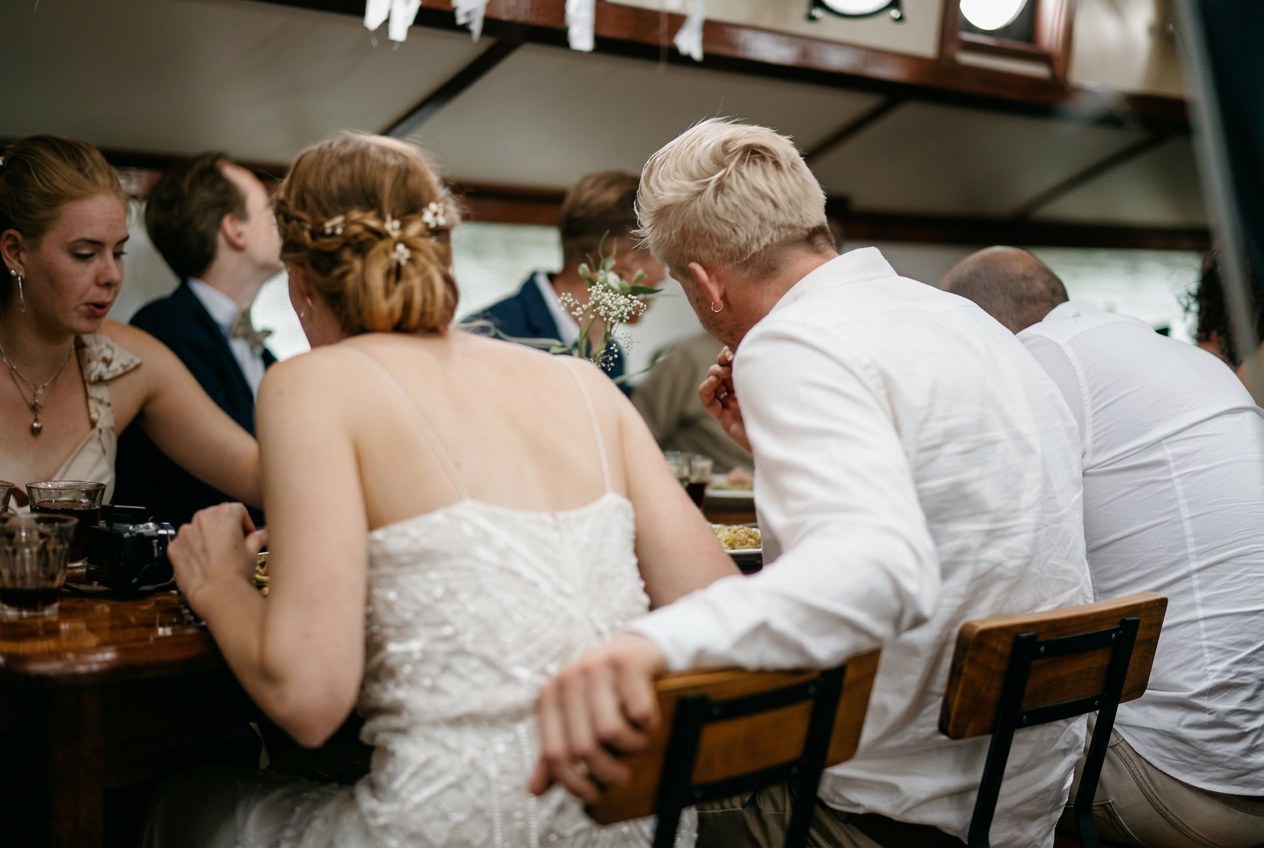
On the wedding day itself, there is only one person you seek out if something needs coordinating, and she is already there, with a full overview of the schedule. That, ultimately, is the greatest luxury we can offer: no stress over who is responsible for what.
While the couple enjoys the ceremony on the IJ or the Markermeer, the wedding planner keeps an eye in the background on whether dinner is served on time, whether the music matches the schedule, and whether the photographer is in the right place at the right moment.
Knowledge of cruising area and logistics
A wedding planner specialised in weddings on the water knows the particularities of every cruising area. The canals call for smaller vessels and awareness of other water traffic, the IJ offers more space but also more wind, and the Markermeer requires longer sailing times and an alternative programme in case of too much wind.
This knowledge prevents surprises. A day's structure that looks correct on paper but doesn't account for waiting time at a lock quickly runs late on the day itself. We build in these margins as standard.
Working with the skipper and crew
The skipper is responsible for the sailing, the wedding planner for the guests' experience. Both roles must communicate constantly, for example about the moment the engine is muted for the vows, or an alternative route in case of unexpected congestion on the water.
We have worked with the same skippers and crews for years, which means this coordination runs smoothly, with nothing needing to be explained on the day itself.
What a dedicated planner delivers for guests
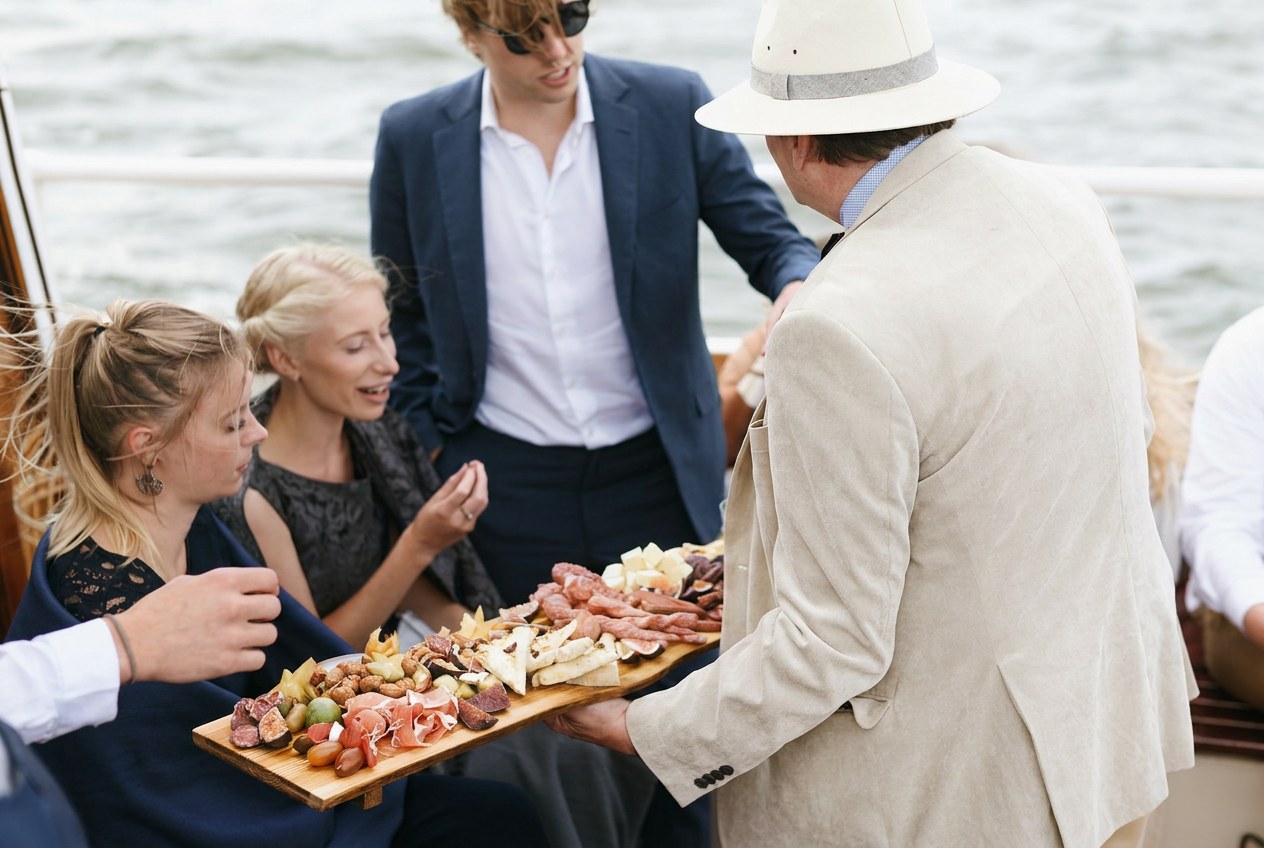
It isn't only the couple who benefits from a dedicated wedding planner. Guests notice the difference too: a clear boarding point, a timely drink on arrival, a programme that flows smoothly without waiting. That creates a relaxed atmosphere throughout the day.
Precisely at a wedding on the water, where logistics are more complex than at a fixed venue, that smooth direction makes the difference between a day that feels like a celebration and a day that feels like a planning exercise.
"On the day itself, there's only one person you look for, and she's already there."
Frequently asked questions
- Is a wedding planner compulsory for a wedding on the water?
- Not compulsory, but strongly recommended given the additional logistics of sailing times, locks and weather dependency. A dedicated planner prevents these factors being arranged separately by different parties.
- Does Elise Rijkes work with a fixed team of suppliers?
- Yes, we work with regular skippers, caterers and florists experienced with floating wedding venues. This makes coordination on the wedding day itself considerably smoother.
- From what point is it wise to bring in a wedding planner?
- As early as possible in the process, ideally before the vessel is finally booked. This allows the planner to help decide which cruising area and vessel type best suits the desired atmosphere.
- Does the wedding planner also arrange the official ceremony?
- The wedding planner coordinates timing with the municipality and registrar, so an official ceremony on land and a personal ceremony on board connect without haste.
- What happens if the weather turns during the wedding?
- An alternative arrangement is prepared in advance for every programme in case of rain or wind. The wedding planner decides on the day itself, in consultation with the skipper, which scenario to follow.
In the mood to talk it through?
One dedicated point of contact, from first idea to the final mooring line.
Plan a conversation