Proposals & moments · 20 June 2026 · 8 min read
A wedding transfer over water in Amsterdam: moving guests from A to B in style
Every wedding day has its gaps: the ride to the ceremony, the hour between drinks and dinner. A wedding transfer over water in Amsterdam turns those gaps into the part guests talk about most afterwards.
by Elise Rijkes

Why a transfer over water makes the difference
Between hotel and ceremony venue, between ceremony and celebration venue, or back to the centre at the end of the evening: twenty to forty minutes of sailing is enough for a glass of champagne and good conversation along the way.
For the couple themselves, the transfer is also often the only moment of the day they get to spend alone together, between the busyness of the ceremony and the reception. A short sail gives space to catch a breath.
In a city like Amsterdam, where traffic on land can be unpredictable, a route over water is also often faster, and always more reliable, than a convoy of cars through the city centre.
From hotel to ceremony
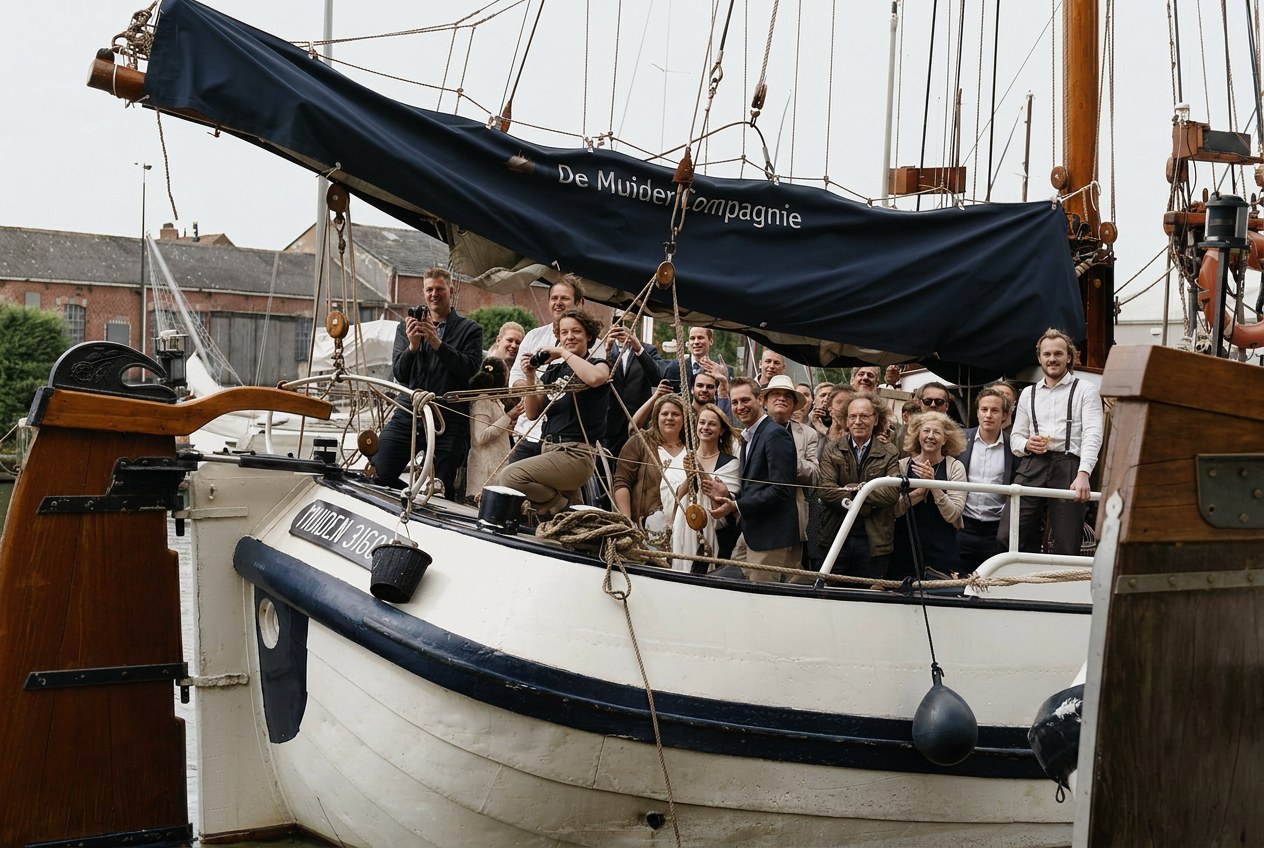
Many couples and guests stay in hotels around the centre or the IJ. A sloop or small saloon boat that collects guests from the hotel steps and sails directly to the ceremony venue prevents parked taxis and scattered arrival times.
For the bride herself, a short sail to the ceremony makes for a beautiful entrance: a calm arrival, the dress clearly visible, while guests already wait on the quay.
From ceremony to celebration venue
After the ceremony, there's often a transition moment needed while the celebration venue is prepared. A sail of twenty to thirty minutes with a glass of bubbles fills this moment perfectly, without guests having to wait in a lobby or marquee.
This transfer can also serve as an informal photo opportunity: guests on deck, the couple against the skyline, without the pressure of a staged photoshoot.
Arranging it practically
Allow around twelve guests per sloop, and plan two departures rather than one overcrowded boat. Always communicate the jetty with a map link rather than just a street name, and station someone on the quay to help guests board and disembark.
In rain or high winds, covered sloops or a small saloon boat are the safer choice. When planning, also account for bridges and locks along the route, as these can affect sailing time.
For larger parties above fifty guests, it's often more efficient to use one larger saloon boat rather than several small sloops, so everyone arrives at the same time.
Timing and schedule
A transfer over water calls for a slightly more generous timeline than transport by road, simply because boarding and disembarking at a jetty takes longer than getting in and out of a car. Allow ten to fifteen extra minutes per mooring point.
We always align the transfer timeline with the master of ceremonies and the venue, so there's no gap between the guests' arrival and the start of the next part of the day.
The transfer at the end of the evening
At the end of the celebration too, a sail back to the centre makes for a lovely finale. Guests who would otherwise need to find a taxi in the small hours instead step calmly aboard for a short, festive final sail through the city.
For the couple, this is often the moment to catch their breath after the evening, back in each other's arms, as Amsterdam's illuminated façades glide past.
Small details, big effect
Blankets against the evening chill, a bottle chilling in the cooler, and music suited to the time of day are enough to turn a simple transfer into a memory. Consider small touches too, such as comfortable slippers for guests who've spent the whole day in high heels.
A brief, personal message from the couple at boarding, read aloud by the skipper or master of ceremonies, gives the transfer a warm, personal touch.
When a transfer over water isn't the best choice
For very short distances, or when the ceremony and celebration venues have no direct water connection, a transfer over water can become logistically more complicated than transport by road. We always advise honestly on this during planning.
In that case, we often combine a short sail with a brief walk or a single car journey, so the special feeling of water is preserved without unnecessary delay.
"The finest moments of a wedding day often arise between the official items on the programme, and it's precisely there that water gives all the room needed."
Frequently asked questions
- How many guests fit in a transfer boat?
- Allow around twelve guests per sloop. For larger parties, we prefer to plan two departures or deploy a larger saloon boat.
- What happens in bad weather during the transfer?
- We then choose covered sloops or a small saloon boat, so guests stay dry and comfortable while still enjoying the sail.
- How much extra time should we allow for a transfer over water?
- Allow ten to fifteen extra minutes per mooring point, especially for boarding and disembarking larger groups.
- Is a transfer over water faster than by car?
- In central Amsterdam, a route over water is often faster and always more reliable than a convoy of cars, since there's no traffic congestion or parking to contend with.
- Can the transfer also be used at the end of the evening?
- Yes, a short sail back to the centre after the celebration is a popular, atmospheric way to close the wedding day for both guests and couple.
In the mood to talk it through?
One dedicated point of contact, from first idea to the final mooring line.
Plan a conversation